Wednesday, 19 June 2013

Love On The Water.

Since the beginning of April I have visited Bretton Country Park, West Yorks, every 10 days, to observe the resident Great Crested Grebes. 


Walking down to the hide on the Upper Lake I always experience a terrific feeling of expectation.You enter the hide from a pathway at the back of the hide. Once inside you have full lake frontage.


A pair of Great Crested Grebes have nested in the middle of the lake. It is possible to take some distant shots from the hide.


Before the breeding season both sexes acquire conspicuous and beautiful dark head plumes which are erected during the height of the courtship display.


The courtship display involves head-shaking, diving, fluffing out the feathers in the so- called 'cat' display, and presenting each other with water plants while raising from the water breast to breast.


At the end of April on a regular visit I was dismayed----they had abandoned their nest.Not such a surprise I suppose as in the previous visit I had seen a mink in the water around their nest. Predation of eggs must be a real threat .

Nature fights back as on the next visit they had sited a new nest further up on the lake---a raft of water weeds attached to reeds to stop it drifting away.


This visit I was fortunate to witness the Great Crested Grebes mating ritual. She was 'in position' for some time before the male took the hint. Then it was all over very quickly.


My visit yesterday on a hot June day saw the grebe still on the nest. Its partner was away up the lake diving for a meal.


I so look forward to visiting next time to see if I can spot the chicks. Fingers crossed!

Thursday, 23 May 2013

Feather Fascination.

       Around 8,000 pairs of gannets return every year to RSPB Bempton near Flamborough on the East Coast.Gannets mate for life.They are renowned for their faithfulness,usually returning to the same nesting site with the same partner.

     I was thrilled to see this young gannet with its feather present ready to take to its intended.Young gannets are often seen presenting each other with flowers and feathers.

     For a few moments i watched as it ruffled up its own feathers carefully still clutching the present.Obviously this gannet wanted to look its best on presenting the gift.


                      Another gannet sneaks behind to watch the action.


         Not wanting to waste any more time it flies off to present its gift.


      We returned the next day to the same spot on the cliffs.The weather conditions had changed dramatically.I found it difficult to hold my camera against the wind.However the gannets were enjoying a spot of formation flying.


       Whenever it got very gusty they simply put up their tail feathers.What a brilliant rudder.

Thursday, 2 May 2013

East Coast Barn Owl Encounter.

Looking pleased here as we were tipped off today as to where the barn owl would be hunting.


First task was to try and conceal myself by trying to break up my outline with camouflage.


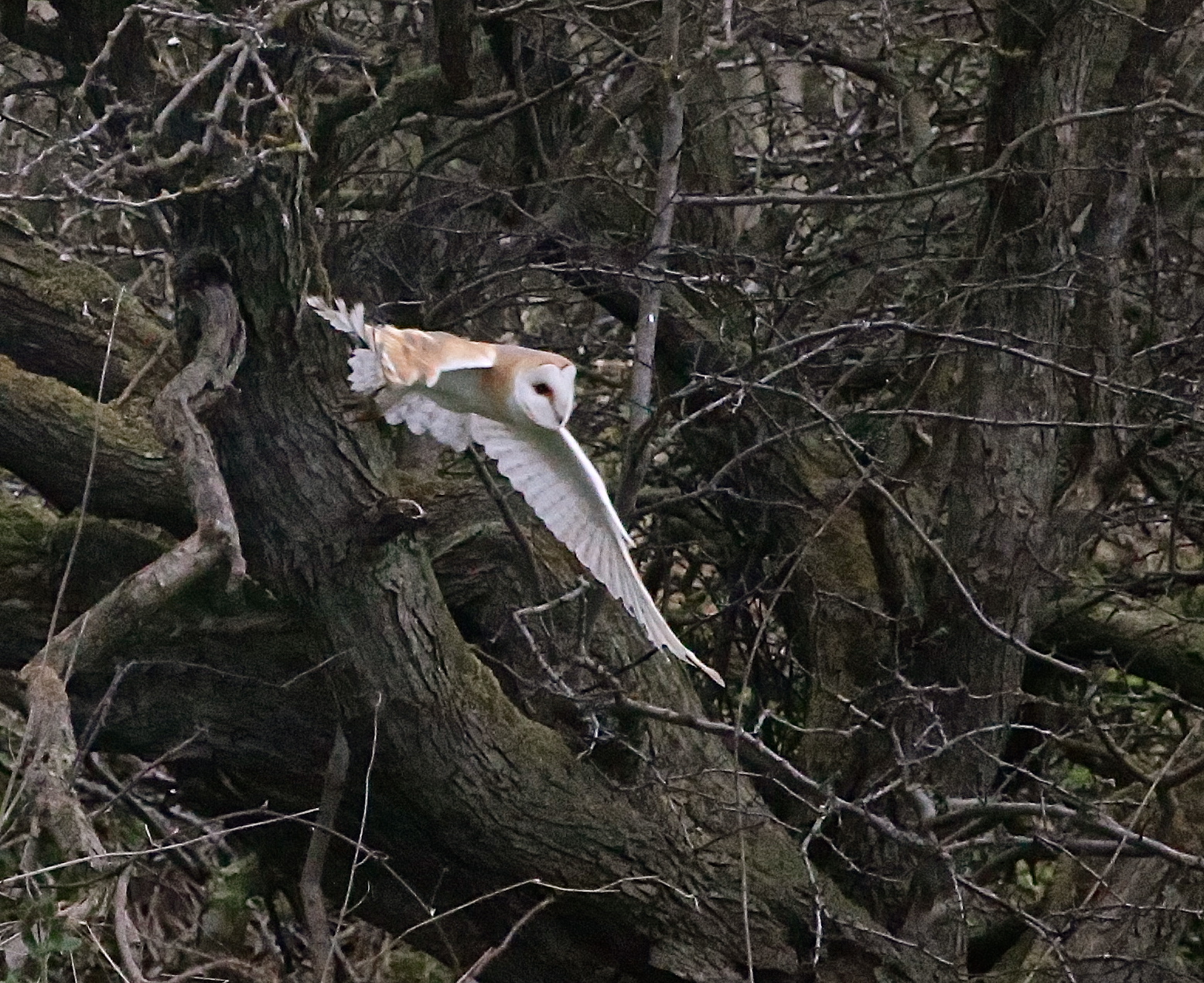
It was breathtaking as the barn owl started to fly towards me and start hunting on the banking.It looks as if they can feel the wind under their wings.


Hunting was the one thing on this barn owl's mind.After a few minutes it moved on to other fields.

Waiting patiently, it returned about an hour later.This time it seemed intent on finding a suitable post to spy its prey from.


Exceptional hearing is the barn owl's most important hunting tool.One ear is slightly higher than the other.So the owl can calculate the exact position of the sound source. A single barn owl, on average, captures 2,000 mice and voles  every year.


It's heart shaped face and snowy white underparts are stunning to observe.It was recently voted Britain's favourite farmland bird.It lives for around 4 years.It's presence is heard by screeching,hissing,yapping and snoring.


After watching for about 15 minutes where it was post hopping, it launched off into a nearby dell which was quite woody.I felt this background gave it a mystical quality.


Monday, 22 April 2013

'Birdorable'.

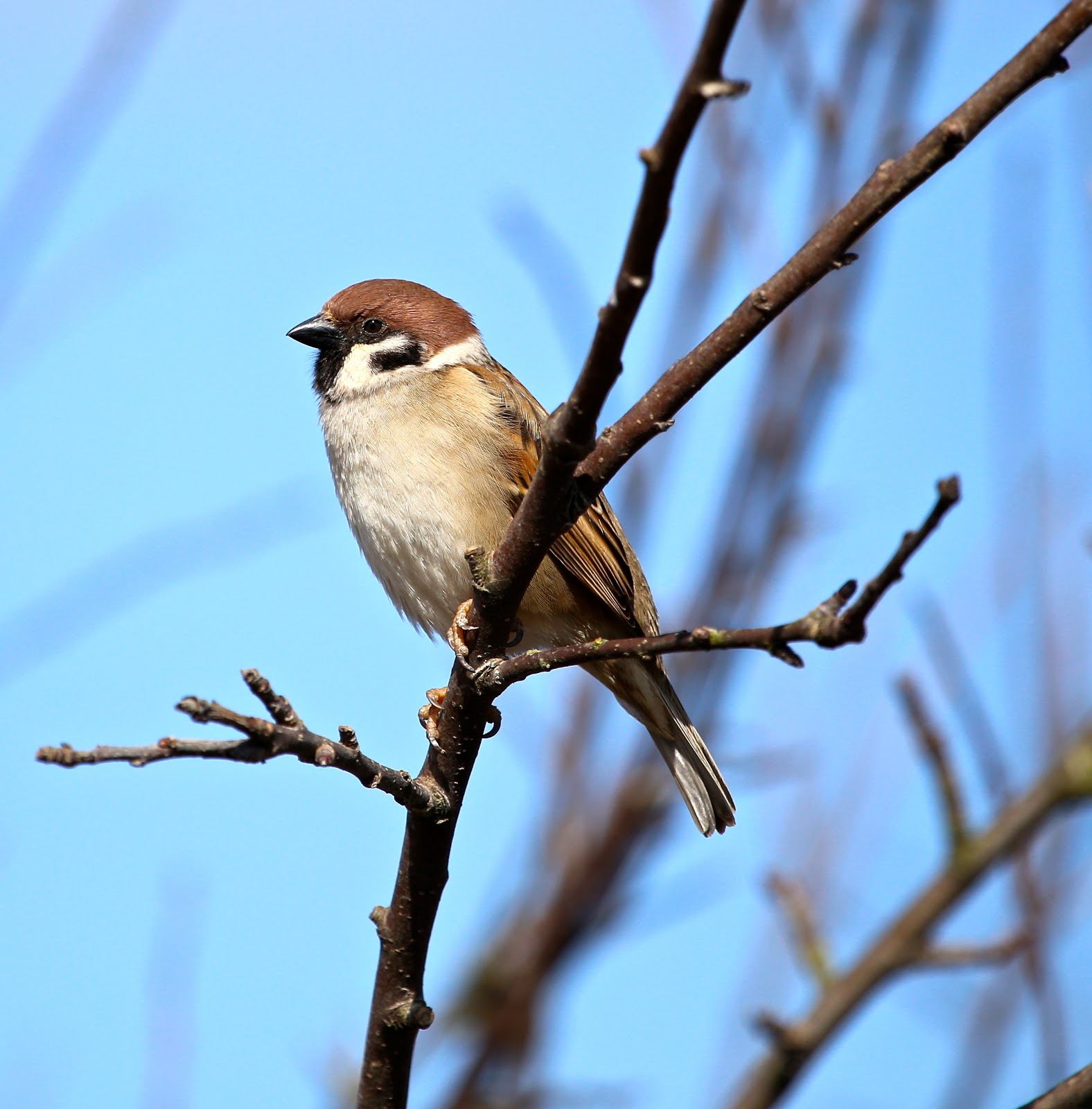
Tree Sparrows are birds of farmland,hedgerows and woodland edges.They are not associated with man in the way that the House Sparrow is in the U.K. Many people think of them as the country cousin to the House Sparrow.


Last week in East Yorkshire once I had "got my eye in",they were easy to separate from the House Sparrows.This is a good time of year to spot them before the leaves appear on the trees.


They are described as a small,tidy looking bird.A chestnut crown and black patches on the cheeks tell it apart from the house sparrow.


From a colony of Tree Sparrows can be heard a "teck-teck" call.


I find them fascinating to watch as they are so agile.Often they are described as "birdorable".


Wednesday, 17 April 2013

East Coast Easter Break.

Bitterly cold easterly winds prevented the seabirds arriving to reclaim their cliff nesting sites.Interesting to watch their arrivals with the changes in weather conditions.The agile razorbills claimed their ledges.Wonderful orange mouth linings are seen as they start to bill to each other.


                         Observing the razorbill from Bartlett Nab observation point.

Saturday, 26 January 2013

Britain's Favourite Bird.

This photo shows our national bird in all its glory. Look after your garden robins well, this winter, as average life expectancy is only 1.1 years, due to high mortality in their first year. Getting beyond this is a blessing and they can then live as old as 12 years!


I find robins so photogenic. They turn to the left, to the right, face on, stand with their back to you and look over their 'wing' at you.


You can feed robins food such as mixed seed, nyjer seed, fat balls, suet sprinkles, sun flower seeds, peanuts as well as kitchen scraps like mild grated cheese, cooked rice and porridge oats.

It is the Big Garden Birdwatch this weekend (26th and 27th January 2013) giving people across the UK the chance to be part of the world's biggest wildlife survey. If you wish to take part details can be found at www.rspb.org.uk


Monday, 31 December 2012

My Best Moment, 2012

My best moment was an early morning close encounter with an inquisitive red squirrel, on the Underscar Estate, near Keswick in Cumbria, who decided it was time to pose for me.

I was unaware at first that this red squirrel was watching me from a very safe distance as I put hazelnuts into a hiding place in the boundary wall.


With its ears poking upwards it seemed captivated watching where I would move to next. It seemed to know if it waited patiently I would leave it to eat the nuts in peace.


When it feels I've retreated to a safe distance, it creeps into the boundary wall and checks out the hazelnuts.


The bold squirrel uses its nose and whiskers to select the chosen nut.


King of the castle, the red squirrel savours the hazelnut.


A privileged moment for me on the morning of 20th November. These six shots were taken in sequence very quickly. I love how this red squirrel could show me so many poses in so short a time.